
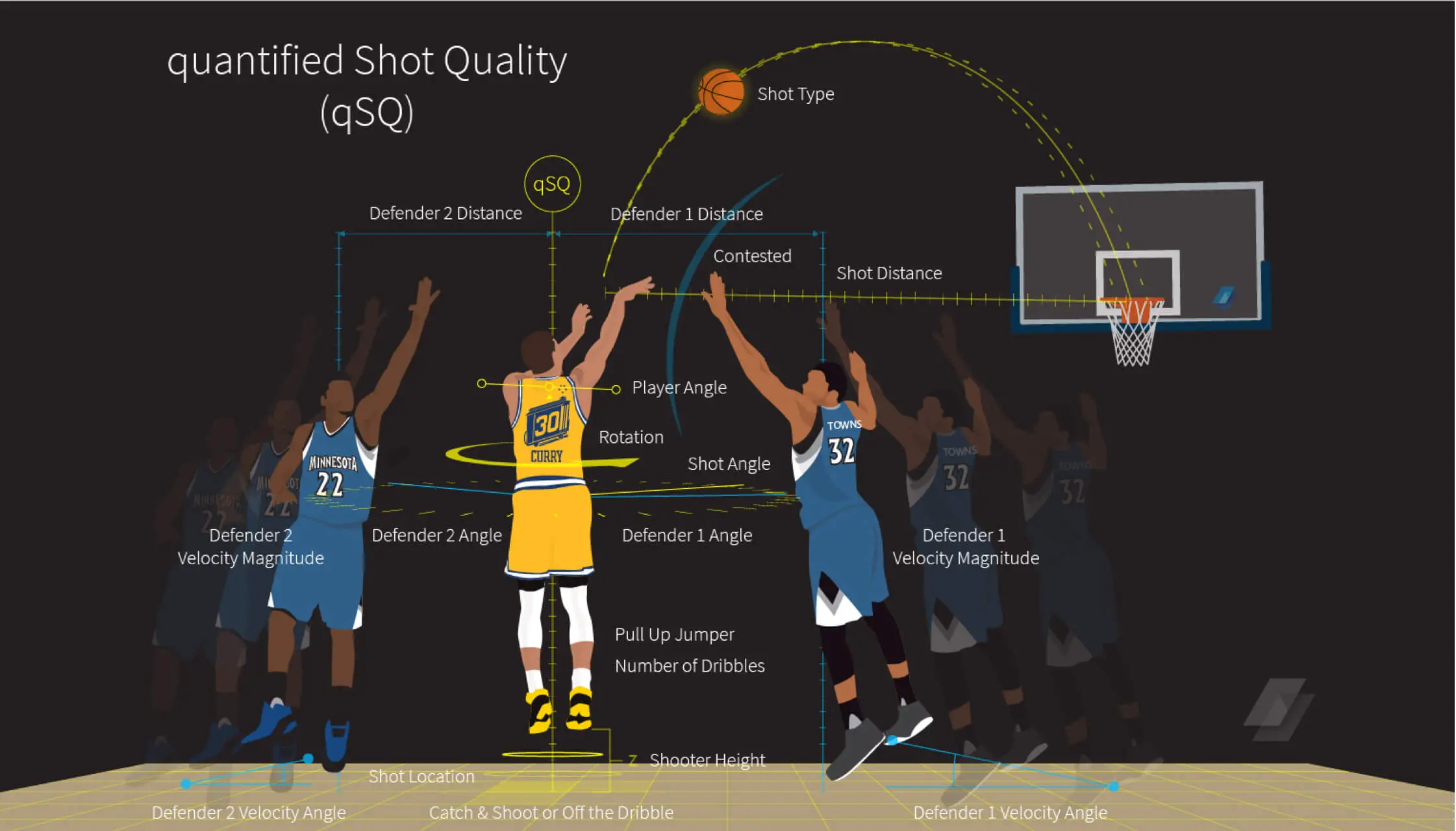
The Evolution Of the Three; How Analytics Changed the Game


The three-point shot has completely changed basketball. What was once a risky gamble is now the centerpiece of nearly every NBA offense. Teams live, and sometimes die by the three. As the game keeps stretching farther from the rim, one question remains: has the three-point revolution gone too far?
How It All Started
When the three-point line was introduced to the NBA in 1979, most players barely noticed it. Coaches saw it as a gimmick, a desperation shot, not a strategy. Teams averaged fewer than three attempts per game, and legends like Magic Johnson and Larry Bird built their dominance inside the arc.
That began to change in the 1990s and early 2000s, when shooters like Reggie Miller and Ray Allen started showing just how dangerous the three could be. Still, it wasn’t seen as a viable strategy. Teams that shot a lot of threes were viewed as gimmicky and unsustainable. Early on, these ideas were right as uptempo, fast-paced teams were rarely able to win big games.
As time went on teams started to shoot more threes. Certain coaches begun to build systems around analytics due to numbers favoring threes over mid-range shots but the league still hadn’t seen a fast paced, three point chucking team win anything of substance.
The Three Point Revolution
The Golden State Warriors didn’t just shoot more threes they changed how teams thought about offense altogether. By the mid-2010s, analytics had already shown that the three-point shot was the most efficient play in basketball. Golden State took that concept and built their entire system around it.
Under Steve Kerr, the Warriors used spacing, pace, and movement to stretch defenses to their breaking point. Their “small-ball” lineups often featuring Draymond Green at center turned traditional basketball upside down. Instead of size and post play, the Warriors prioritized speed, passing, and floor spacing. Every possession became a math problem: if your opponent is shooting 40% from three while you’re taking twos, you’re losing ground fast.

During the 2014-15 season the Warriors became the first team to win a title with this style of play. This was the first domino to fall because golden state followed up their first championship by breaking the NBA’s regular season win record in 2015-16. They won 73 games and Stephen Curry became the league’s first unanimous MVP. During both these years they led the league in three pointers made and offensive rating (via cleaningtheglass). The result wasn’t just entertaining basketball, it was the blueprint for the modern NBA. What started as a simple analytics advantage evolved into a complete shift in how the game is played.
The Analytics Era
Once the Golden State Warriors proved that the three-point shot could fuel a dynasty, the rest of the league had no choice but to adapt. Front offices began investing heavily in analytics departments, coaches shifted their playbooks, and rosters were rebuilt around spacing and pace. The NBA entered what many now call the “efficiency era.”
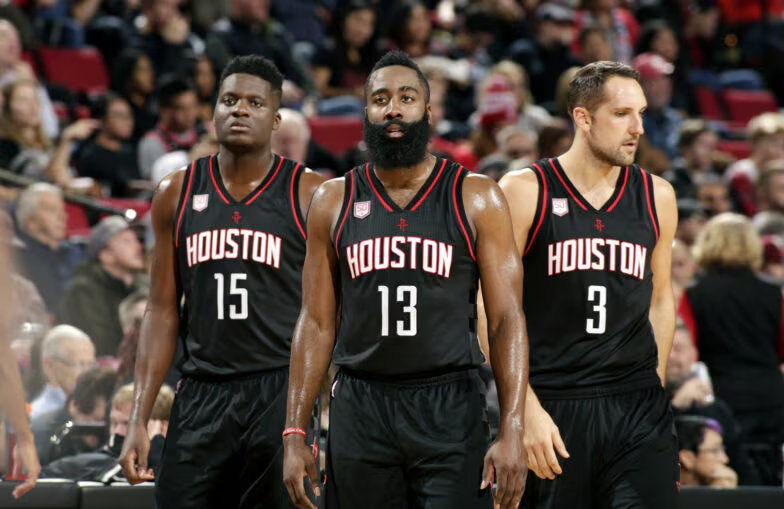
Teams like the Houston Rockets, under Daryl Morey, took the idea to the extreme nearly abandoning the midrange entirely in favor of threes and layups. The logic was simple: three is worth more than two, and the math always wins over time. In 2013, teams averaged around 20 three-point attempts per game. By 2023, that number had more than doubled to nearly 35.
Schematically, offenses evolved to match the math. Shooting became a requirement instead of a suggestion. Traditional big men were replaced by stretch forwards who could space the floor and pass. Guards were expected to shoot off the dribble, and wings became playmakers. Transition offense became a weapon; teams pushed the pace not just to get to the rim but to find open shooters early in the clock.
Defenses, meanwhile, were forced to evolve just as quickly. Switch-heavy schemes, versatile defenders, and closeout discipline became essential. The game grew faster, more perimeter-oriented, and more reliant on decision-making than ever before. Basketball had officially entered the era of spacing and speed all born from a single realization: the three-point shot wasn’t just efficient, it was essential.
The Double-Edged Sword Of the Three
The three-point shot has made basketball faster, smarter, and more exciting but it’s also made it more predictable. In today’s NBA, most possessions look the same. They start with a pick-and-roll to create an advantage and ultimately end in a drive-and-kick for a three pointer. What was once a creative advantage has become the default strategy for almost every team in the league.
That sameness has led to growing criticism. Games with 80 combined three-point attempts can start to feel repetitive, and when shots aren’t falling, the product can look sloppy. The math still favors the three, but basketball isn’t played on spreadsheets. Momentum, rhythm, and shot selection still matter things analytics can’t fully capture.
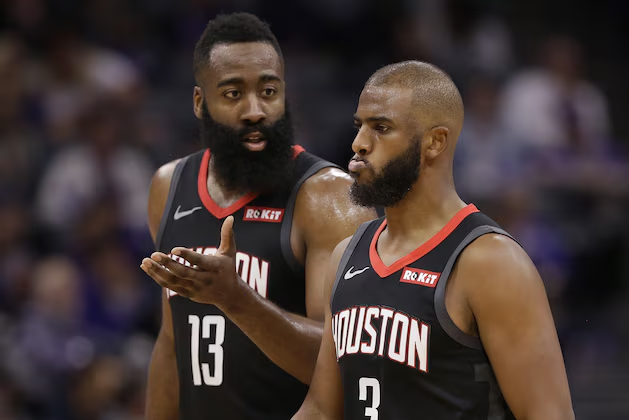
There’s also the issue of variance. When teams rely so heavily on the three-point shot, one cold stretch can decide a game — or an entire playoff series. We’ve seen elite teams live and die by the three, from the Rockets’ infamous 0-for-27 slump in 2018 to countless upsets where the underdog simply shot better from deep. The best teams in the modern era do a good job of balancing when the threes are taken, and who takes them.
Finding Balance In the Modern Game
The three-point shot isn’t going anywhere, it’s too valuable and too deeply woven into how basketball is played today. But the next evolution of the game may not come from shooting more threes; it might come from learning when not to. The best teams in today’s NBA are the ones finding balance blending analytics with instinct, numbers with feel.
Basketball has always evolved through innovation. The Warriors used math and movement to change the game, now, a new wave of teams is figuring out how to make it beautiful again. The next era of basketball might not be about pushing the three-point revolution further, but about perfecting its balance.
Because at its core, basketball has never been just about efficiency, it’s about rhythm, teamwork, and timing. The three-point revolution changed the game in a way we had never seen before, as teams continue to learn how to harness it offenses are only going to get better. It’ll be interesting to see how it all shakes out. Let me know if you agree


